Define hull level, cold or hot route, wax strategy, final container, and cake outlet before the equipment offer is written.
Sunflower oil projects become clear when the buyer describes the seed first, then the oil they want to sell. Whole seed, prepared kernels, pale cold-pressed oil, high-yield hot pressing, dewaxed clear oil, refined bottled oil, and crude bulk oil all need different boundaries.
Before choosing a press size, the feed should be named as oilseed sunflower, confection sunflower, mixed seed, partially dehulled material, or prepared kernels. Each option changes oil color, wax, cake texture, hull handling, and the downstream offer.
Vibrating screen, destoner, and magnetic separation remove stalks, stones, and metal before disc hulling. This matters because sunflower seed is light and irregular.
Whole-seed pressing is cheaper but darker and waxier. Low residual-hull kernel pressing produces paler oil, lighter taste, easier dewaxing, and usually higher preparation cost.
Separated hulls may go to biomass fuel, fiberboard filler, or compost. Press cake can be sold as feed material when protein and residual oil fit the local market.
High-oleic bottled oil often justifies lower-temperature handling and stricter filtration. Standard cooking oil normally favors conditioning or hot pressing, then dewaxing or refining according to the sales channel.
Hot route referenceCapacity planning should use batch cycle, feed temperature, cake discharge, and filter capacity together, not press force alone.
Open reference
Cold route referencePremium cold pressing needs a calmer rhythm and better kernel preparation; the value must be recovered through product price.
Open referenceUse cleaner kernels, lower temperature, slower cycles, and careful polishing. The selling point is lighter color and product story, not maximum hourly output.
Conditioning improves oil flow and makes shift output easier to plan. Oil color is usually deeper, so filtration, dewaxing, or refining must match the final container.
If one factory wants both premium and standard SKUs, separate tanks, cleaning rules, lot records, and changeover time must be included.
Natural sunflower wax can crystallize and make oil look cloudy in cool storage. Whole-seed routes carry more wax; kernel routes carry less. The scope should state whether it includes settling only, filter polishing, winterization/dewaxing, neutralization, bleaching, deodorization, filling, or bulk transfer.
Finished oilColor and clarity are different. A cold-pressed oil can look pale but still haze if wax is not removed or accepted in the product specification.
Open reference
Transfer boundaryA filling-ready line needs cleaner transfer and final filtration than a bulk-oil dispatch point. The end container should be named before equipment pricing.
Open referenceThe same press can sit in very different projects: press-only replacement, cleaning plus dehulling plus pressing, crude oil with settling tanks, dewaxed bottled oil, or a refined and filled retail program. Pricing becomes credible only when the boundary is written in operational terms.
Hydraulic press class matters, but sunflower projects should not copy the same paragraph used for peanut or soybean. Sunflower sizing has to start from dehulling depth, wax load, final container, and whether the oil is crude bulk, dewaxed clear oil, or refined bottled oil.
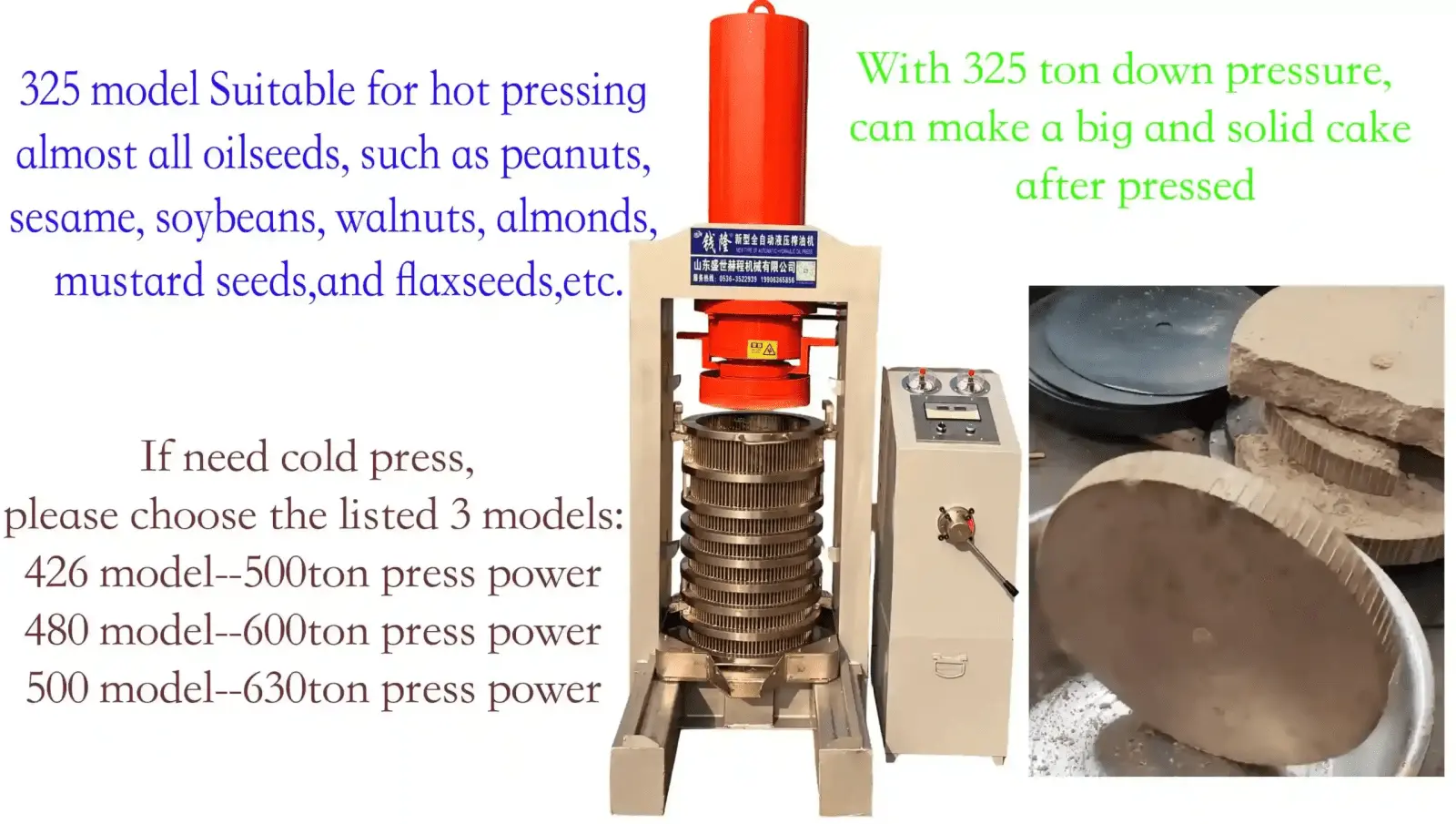
A 300/325 class discussion means different things when hull remains in the material. The oil color, wax load, cake value, and filter budget all change.
A pale cold-pressed oil can still haze in cool storage. If clear bottles are planned, dewaxing and final filtration belong in the same scope.
Separated hulls, sunflower cake, bagging, silos, conveyors, or manual carts change the press-room footprint as much as the press model.
Sunflower hulls are 20–30% of seed weight. Disc hullers crack the shell; aspirators separate hull fragments. Kernel-pressing projects target ≤8% residual hull for lighter oil color and lower wax load.
Crude sunflower oil contains 600–1200 ppm wax. The oil is cooled to 5–8 °C, held for 24–48 h to crystallize wax, then filter-pressed. Without this step, bottled oil turns cloudy on the shelf. This is unique to sunflower among common oilseeds.
Regular linoleic sunflower is hot-pressed (300/325, 30–40 min/barrel). High-oleic premium sunflower is cold-pressed (355–500, ~2 h/barrel). Some plants run both models for different product tiers.
Separated hulls are sold as biomass fuel or fiberboard filler. Sunflower cake (28–32% protein) is a feed ingredient. Hull and cake handling should be planned alongside the press to avoid plant bottlenecks.
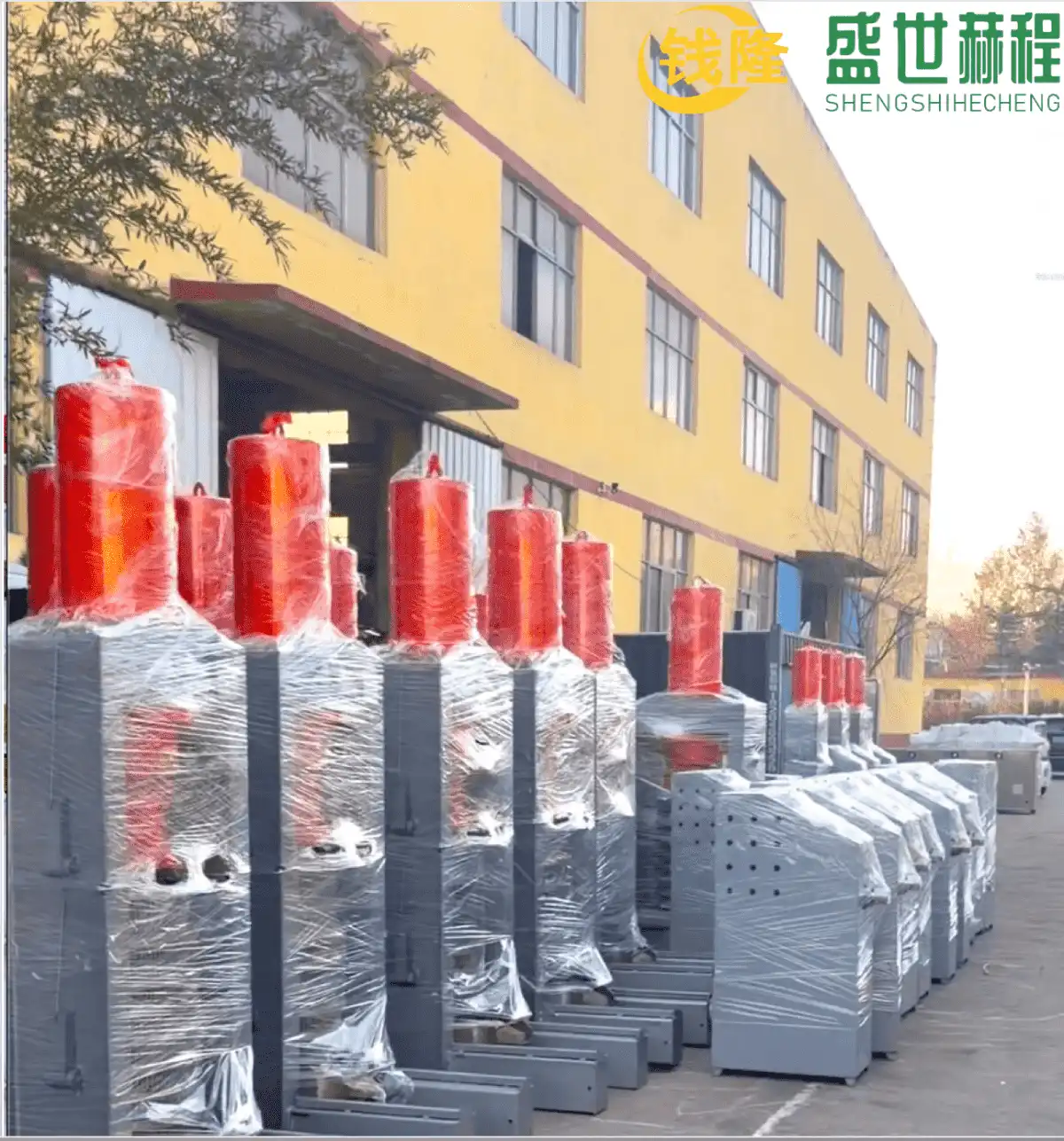
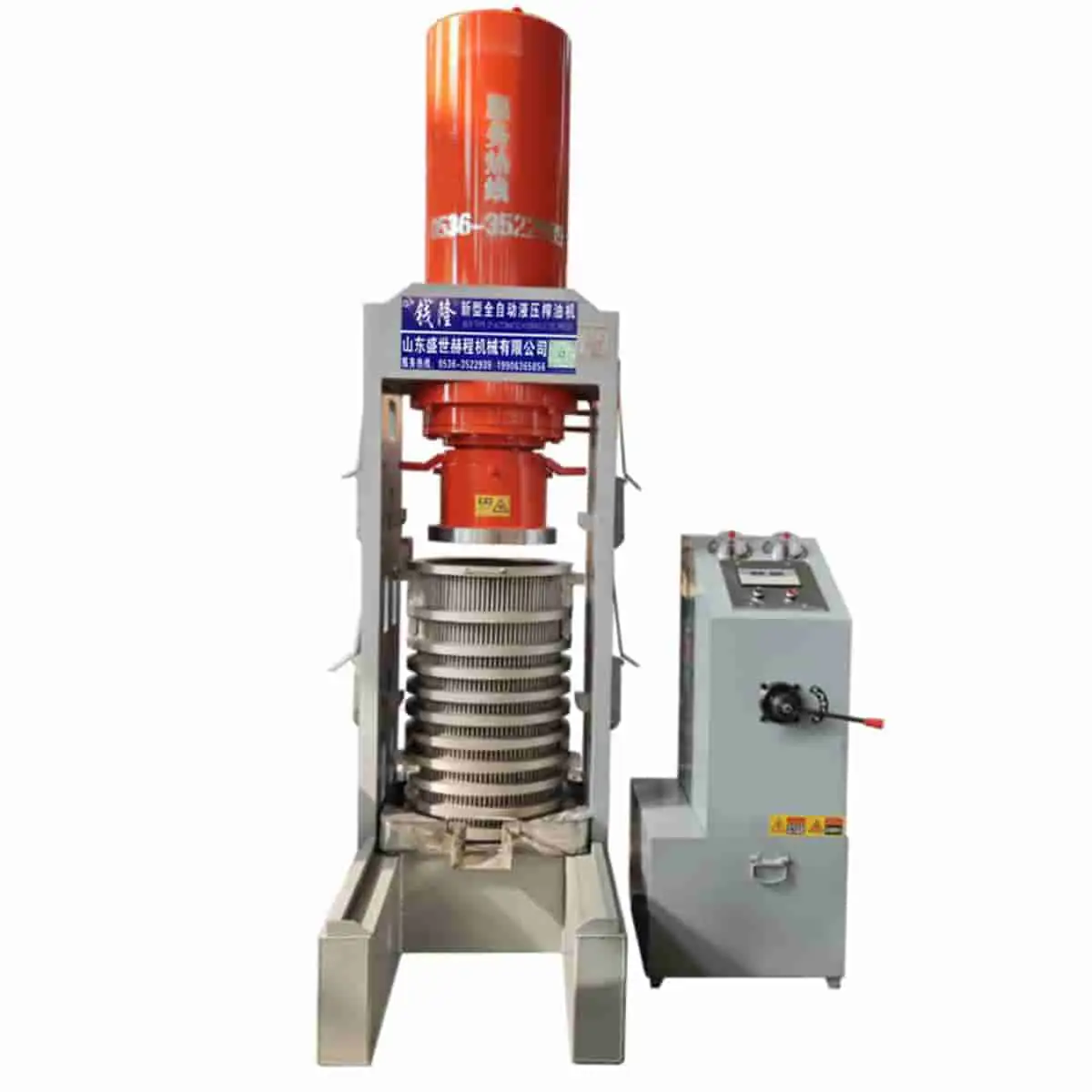
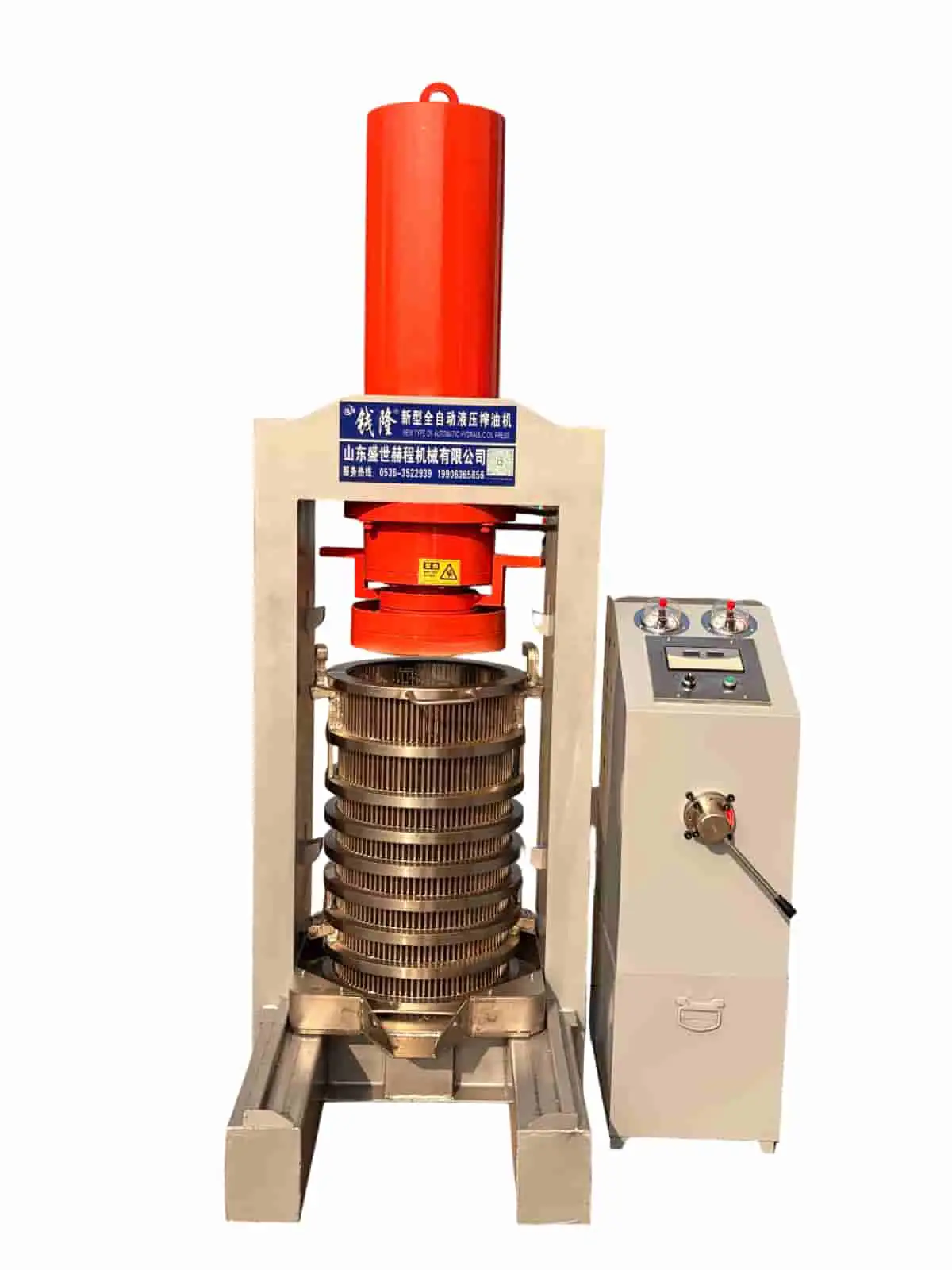
Seeing the barrel, frame, and loading space makes capacity, shifts, and model selection easier to discuss.
Useful for checking footprint, access aisles, loading side, cake discharge, and filtration position.
Bagging, bins, or crushing after discharge changes press-room flow and by-product value.
When the project moves beyond trial batches, workshop height, lifting, loading, and filtration need to be checked together.
For export projects, voltage, crate packing, spare parts, installation mode, and destination port should be aligned early.
Fast startup after arrival depends on power, foundation, lifting, and staffing being confirmed before shipment.
Sunflower seed contains 600–1200 ppm natural wax that dissolves in warm oil but crystallizes at room temperature, causing haze. Winterization (dewaxing) — cooling to 5–8 °C for 24–48 h then filter-pressing — removes the wax. Without this step, retail bottles look defective.
Share feed condition, target output, post-press destination, and site constraints, and we will turn scope into a workable engineering plan.